
Our Impact
Our mission is to shape a vital living environment. We are committed to sustainability: not just for our employees, clients and partners but because it is crucial to our future. This section highlights the progress we made in 2025 in terms of sustainability and impact. Here we present the challenges we face, our strategic vision for those challenges, and our achievements.

Working towards a vital living environment
The sustainability landscape continued to shift rapidly in 2025. Extreme rainfall, prolonged droughts, heatwaves and increasing wildfire risks again highlighted the urgency of climate adaptation. At the same time, geopolitical uncertainty intensified, with global tensions affecting the availability and affordability of energy and critical materials: developments that added further pressure on organisations navigating the transition to a more resilient future. These challenges underscore an important truth: sustainability is no longer a distant ideal, but an essential foundation for long‑term organisational stability. Businesses increasingly face tangible impacts from climate and geopolitical disruptions, making resilience the new license to operate rather than an optional ambition.
Despite a year marked by external uncertainty and internal transitions, TAUW remained focused on helping clients navigate the pressing sustainability challenges they face. Throughout 2025, our work centred on making sustainability concrete and achievable in practice, supporting organisations as they responded to climate risks, resource constraints and evolving regulatory demands. Instead of major leaps, progress came through steady, consistent steps in the projects we delivered: integrating nature-based approaches, strengthening climate adaptation strategies and advancing practical measures toward circular and resilient systems. Each of these contributions played a part in creating healthier environments and more robust communities. Progress may be gradual, but every step brings us closer to a future that is resilient, fair and sustainable.

Our handprint: impactful solutions in our services
As engineers, we are dedicated to minimising our footprint while maximising our positive impact: that is our handprint. Through our work, we can make a significant contribution to helping our clients reduce their own environmental footprint and adopt more sustainable practices in the solutions we provide. To understand whether our services are accelerating this positive impact, we want to measure and monitor our results. Our approach involves assessing both the sustainable outcomes of client projects and our efforts to achieve these positive effects.
In 2025, we continued developing our methodology to quantify our positive impact. We connected projects and business themes to the most material environmental, social, and governance KPIs, summarising each project’s main impact. Our internal stakeholders recognised and aligned with the KPI set provided. In 2026, we will focus on automating and digitalising the existing methodology and embedding it into our current commercial and project processes, enabling a larger share of our project portfolio to be assessed.
The handprint emerges at the intersection of people, market dynamics, and financial strategy: reflecting the lasting impact we create when human potential, customer needs, and business growth are aligned. We aim to be able to substantiate our positive impact alongside our declining footprint and nonfinancial KPIs. In doing so, our method not only strengthens our own sustainability performance but also helps inspire broader positive change within the environmental consulting sector and beyond.
Our footprint: driving sustainable operations
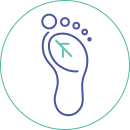
In 2025, we made significant progress in reducing our carbon footprint through a series of targeted initiatives. We reached an important milestone in climate action by obtaining SBTi certification for our climate mitigation goals, including our disaggregated emissions targets. We further expanded our electric vehicle fleet, enhanced the sustainability performance of our offices, and actively promoted the use of public transport for commuting. We also commissioned a 200 kWh on-site battery at our Kamperstraat office, enabling us to store solar energy from our rooftop panels, reduce peak electricity demand, and significantly lower our CO₂ emissions.
We also updated our sustainability governance structure and integrated ESG into our planning and control cycle to embed sustainability more deeply into our overall strategy. An internal ESG Support Hub was established to provide guidance and technical expertise on sustainability topics. In addition, we are updating our Double Materiality Analysis to align with Corporate Sustainability Reporting Directive (CSRD) requirements. Furthermore, we are developing more streamlined data-collection processes to gather relevant sustainability information in preparation for transparent reporting under the CSRD and to ensure we meet the highest standards of accountability.
Carbon Footprint: GHG emissions
The total Scope 1 and 2 carbon footprint of TAUW in 2025 is 1.281,26 tCO₂e. As an environmental engineering consultancy, we recognize this represents only a minor share of our emissions, and that most of our emissions occur in our upstream value chain.
Our ESG principles
Previously, we established our TAUW ESG principles. These principles form the foundation of our commitment to Environmental, Social, and Governance factors, guiding our operations and our interactions with clients, partners, and the communities we serve.

Committing to a sustainable future
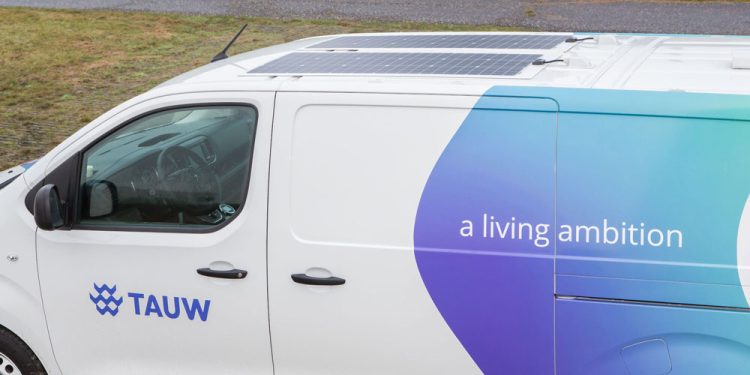
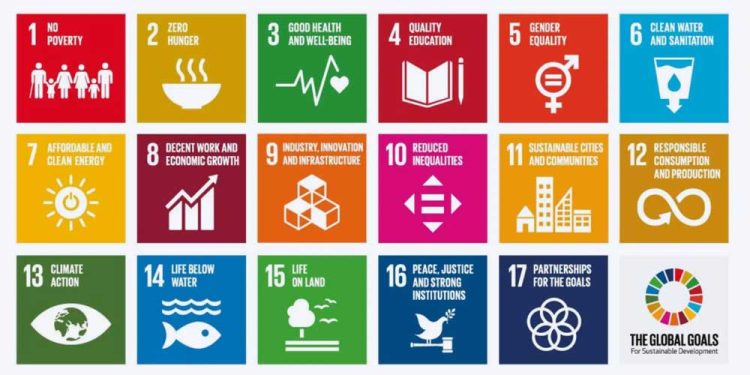
TAUW is committed to setting the standard for sustainability. We actively contribute to the United Nations’ Sustainable Development Goals (SDGs) and align with the UN Global Compact Network, demonstrating our dedication to adopting and reporting on sustainable and socially responsible policies. We also joined the Science Based Targets initiative (SBTi) NetZero Standard. This commitment underscores our proactive approach, ensuring that our efforts are underpinned by rigorous scientific calculations and measurements.
TAUW Group has set ambitious targets to reduce our greenhouse gas (GHG) emissions:
- 50% reduction in Scope 1 GHG emissions per full-time employee by 2030
- 100% reduction in Scope 2 GHG emissions by 2030, compared to a 2019 base year
- 52% reduction in Scope 3 GHG emissions per full-time employee by 2030
- By 2026, transition from spend-based analysis to actual emissions for 10% of total procurement
- Achieve net-zero emissions across our entire value chain by 2050
To further enhance our sustainability efforts, TAUW utilises two key assessment tools:
- EcoVadis: A globally recognised platform that provides a comprehensive evaluation of our sustainability performance across environmental, social, and ethical dimensions.
- CO2 Performance Ladder (Netherlands): This instrument specifically focuses on CO2 reduction and climate objectives, complementing our broader sustainability initiatives.
The use of these tools varies across our entities, resulting in different scores per country. This diversity reflects the unique challenges and opportunities in each country, as well as our commitment to continuous improvement across all operations. Our participation in these assessments is crucial because it enhances transparency and accountability, drives continuous improvement in our sustainability practices, aligns our efforts with global standards and best practices, and demonstrates our commitment to stakeholders and clients.
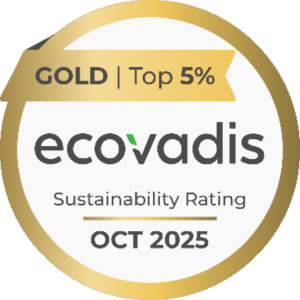
TAUW Netherlands
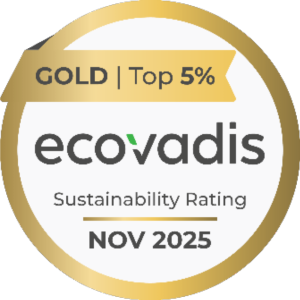
TAUW Italy
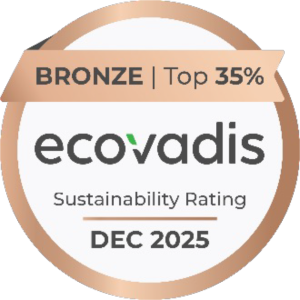
TAUW Germany
TAUW Belgium
* EcoVadis medals are awarded to the top 35% of companies assessed by EcoVadis. Medals are awarded based on the percentile rank of a company which is calculated at the time of scorecard publication. It compares a company’s performance with all rated companies in our database over the previous 12 months. The percentile rank is calculated across all companies in all industries, not per industry.
 tauw.com